
Exploring the Fascinating Calusa Archaeological Sites of Southwest Florida

Southwest Florida holds a remarkable secret beneath its lush landscapes and coastal waters: the remnants of the Calusa people, a powerful Native American tribe that thrived long before European contact. The Calusa left behind a rich archaeological record that reveals their complex society, impressive engineering skills, and deep connection to the environment. Exploring these archaeological sites offers a unique window into a culture that shaped the region’s history and continues to inspire curiosity today.
Who Were the Calusa?
The Calusa were a dominant coastal tribe in southwest Florida from around 500 CE until the 18th century. Unlike many Native American groups, they did not rely on farming but instead built a thriving society based on fishing, hunting, and gathering. Their mastery of the coastal environment allowed them to create large settlements with complex canal systems and shell mounds, which served as both refuse heaps and ceremonial centers.
The Calusa’s influence extended over a large area, controlling trade and resources along the Gulf Coast. Their social structure was hierarchical, with a powerful chief known as the Calusa king, who commanded respect and authority over the people.
Key Archaeological Sites to Visit
Several sites in southwest Florida provide valuable insights into Calusa life. These locations are accessible to visitors and offer interpretive trails, exhibits, and guided tours.
Mound Key Archaeological State Park
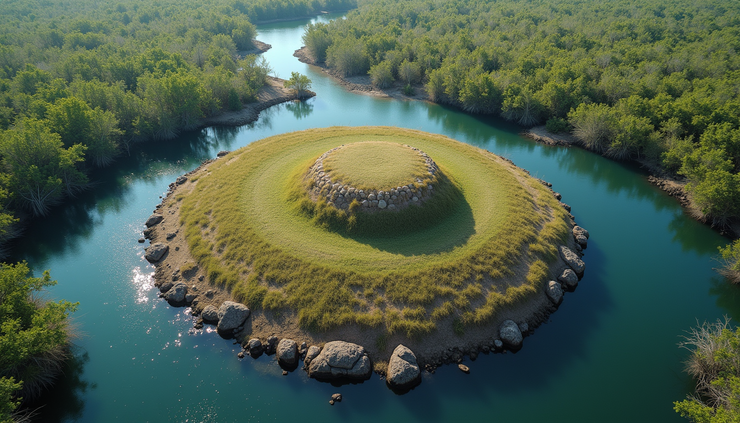
Mound Key is one of the most significant Calusa sites. It is an island made almost entirely of shell mounds, created over centuries by the Calusa as they discarded shells, bones, and other debris. These mounds formed the foundation for homes, temples, and public spaces.
Visitors can explore trails that wind through the mounds and learn about the Calusa’s engineering skills, including their use of canals for transportation and fishing. Mound Key also holds historical importance as the site where Spanish explorer Ponce de León first landed in Florida.
Pineland Site Complex
Located near Cape Coral, the Pineland Site Complex features several shell mounds and a museum with artifacts recovered from the area. The site reveals how the Calusa adapted to changing sea levels and environmental conditions.
The museum displays tools, pottery, and ornaments that highlight the tribe’s craftsmanship. Walking the trails, visitors see remnants of canals and fish traps, showcasing the Calusa’s innovative use of natural resources.
What Makes Calusa Sites Unique?
Calusa archaeological sites stand out because of their extensive shell mounds and water management systems. These features illustrate a society deeply connected to its environment and skilled in modifying it to meet their needs.
Shell mounds served multiple purposes: they were living platforms, burial sites, and ceremonial centers.
Canal networks allowed efficient movement of people and goods by canoe.
Fish traps made from rocks and shells demonstrate sustainable fishing practices.
These elements combined to support a large population without agriculture, relying instead on the rich estuarine ecosystem.

How to Experience Calusa History Today
Many of the Calusa archaeological sites are protected and managed by state parks or local organizations. Here are some tips for visitors interested in exploring these sites:
Plan ahead: Some sites require boat access or guided tours. Check park websites for schedules and permits.
Respect the sites: These locations are fragile and culturally significant. Stay on marked trails and avoid disturbing artifacts.
Visit museums: Local museums provide context and display artifacts that help bring Calusa history to life.
Join guided tours: Knowledgeable guides share stories and explain the significance of the sites in detail.
Combine with nature trips: Many sites are in areas rich with wildlife and natural beauty, perfect for birdwatching and kayaking.
The Legacy of the Calusa
Although the Calusa people no longer exist as a distinct tribe, their legacy remains visible in the landscape and cultural memory of southwest Florida. Archaeological research continues to uncover new information about their society, challenging earlier assumptions and highlighting their achievements.
Understanding the Calusa helps us appreciate the diversity of Native American cultures and the ways people adapted to different environments. It also reminds us of the importance of preserving archaeological sites as windows into the past.
Exploring Calusa archaeological sites offers a chance to connect with history in a tangible way. Whether walking among ancient shell mounds or paddling through canals once used by the Calusa, visitors gain a deeper appreciation for this remarkable culture and the natural world they depended on.

Comments